Rotorua Maori Show
Tours & tickets

Hand-picked by our editors — only the best 5 experiences from 180 reviewed.

Open today 09:00–17:00
Attendance: Moderate — summer peak season
Arrive early to ensure sufficient time for the 90-minute guided tour.
Free cancellation Instant confirmation Mobile voucher Verified partner Book now, pay later
Tickets

Choose your ticket

Verified partners for every tour, free cancellation where available, and instant confirmation on every booking.

Te Pa Tu Māori Cultural Evening with Four-Course Dinner 3 hr 30 min
Standard Entry

Te Pa Tu Māori Cultural Evening with Four-Course Dinner

4.8 (1426)
€143
per person
Instant Mobile voucher Flexible — change up to 24h

Authentic indigenous celebration featuring live performances, storytelling, and seasonal feast in forest setting

Reserve
Te Pō Evening: Māori Cultural Show & Traditional Hāngī Feast 2 hr 30 min
Standard Entry

Te Pō Evening: Māori Cultural Show & Traditional Hāngī Feast

4.7 (441)
€103
per person
Instant Mobile voucher Flexible — change up to 24h

Immerse yourself in indigenous traditions with live performances, geothermal wonders, and authentic cuisine

Reserve

Prices from verified partners. Availability updates in real time at checkout. Free cancellation policies apply where shown.

Highlights

What you'll see inside the attraction

The landmarks, rooms, and views travelers on this tour remember — all visible on a single visit.

Pōhutu Geyser

The largest active geyser in the Southern Hemisphere, erupting up to 20 times daily and reaching heights of 30 metres. It is the most iconic geothermal feature at Te Puia.

Pōhutu Geyser geothermal activity

Pohutu Geyser

Kiwi Conservation Centre

Kiwi bird enclosure photography

Kiwi Conservation Centre

New Zealand Māori Arts and Crafts Institute

Traditional Māori wood carving studio

New Zealand Māori Arts and Crafts Institute

Te Whakarewarewa Thermal Valley

Geothermal valley steam and mud

Te Whakarewarewa Thermal Valley

Rotowhio Marae

Carved traditional Māori meeting house

Rotowhio Marae

Head to head

Te Puia vs Mitai Maori Village — Choosing Your Maori Dance Show Rotorua Experience

Te Puia offers a daytime geothermal exploration and cultural heritage tour, whereas Mitai Maori Village provides an intimate evening forest-based performance and traditional feast.

Feature Top pick Te Puia Mitai Maori Village
Primary Focus
Setting
Time of Day
Geothermal Features
Dining Experience

Verdict: Choose Te Puia for an integrated experience featuring world-famous geothermal landscapes, or select Mitai Maori Village for a dedicated evening immersion into traditional forest rituals and history.

How your ticket works

Book your ticket in 3 steps

  1. 01

    Book online

    Choose your ticket, select your date, and reserve in under two minutes. Secure checkout handled by our verified partner.

  2. 02

    Receive your mobile voucher

    Instant confirmation by email, with a mobile voucher you can save offline. No printing, no queuing at a collection desk.

  3. 03

    Show & enter

    Arrive at the entrance, show your voucher on your phone, and walk in. Most tickets include priority or skip-the-line access.

Plan your visit

Everything you need to know before you go

Practical details for your visit straight from our verified partners — hours, access, rules, and how to get there.

Open today · 09:00–17:00
Opening Hours
09:00–17:00
Address
Hemo Road, Tihiotonga, Rotorua 3040, New Zealand
Accessibility
Wheelchair accessible and complimentary wheelchairs available
Best Arrival
09:00–16:00
Security
Cashless site; all payments via card or digital wallet
Expertise
90-minute guided Te Rā experience available
Mon
09:00–17:00
Tue
09:00–17:00
Wed
09:00–17:00
Thu
09:00–17:00
Fri
09:00–17:00
Sat
09:00–17:00
Sun
09:00–17:00
Location

Address
Hemo Road, Tihiotonga, Rotorua 3040, New Zealand
Security
Cashless site; all payments via card or digital wallet
Expertise
90-minute guided Te Rā experience available

Dress code

Wear comfortable walking shoes suitable for geothermal paths and terrain. Dress in layers as weather conditions in the valley can change throughout the day.

Bags & security

Te Puia is a fully cashless facility, so ensure you have a credit or debit card for any on-site purchases. Large bags may be restricted; please inquire at the admissions office upon arrival.

Photography

Photography is generally encouraged throughout the geothermal valley, including at the Pōhutu Geyser. Please respect signage near cultural areas and the Kiwi Conservation Centre where flash photography is prohibited.

Accessibility

The attraction is wheelchair accessible, and complimentary wheelchairs are available for guest use. Please visit the ticketing office upon arrival to arrange for assistance or accessible equipment.

What to bring

  • Sunscreen
  • Comfortable walking shoes
  • Raincoat or umbrella
  • Water bottle
  • Charged camera
  • Hat
  • Sunglasses
  • Personal identification

Not allowed

  • Drones
  • Tripods
  • Alcohol
  • External food
  • Professional recording equipment
  • Sharp objects
  • Weapons
  • Lighters
  • Flammable materials
  • Pets
  • Smoking materials
  • Chewing gum

Families & strollers

Families are welcome, with children aged 0-4 admitted free of charge. Interactive displays and the Kiwi Conservation Centre provide an engaging educational experience for children of all ages.

Food & drink

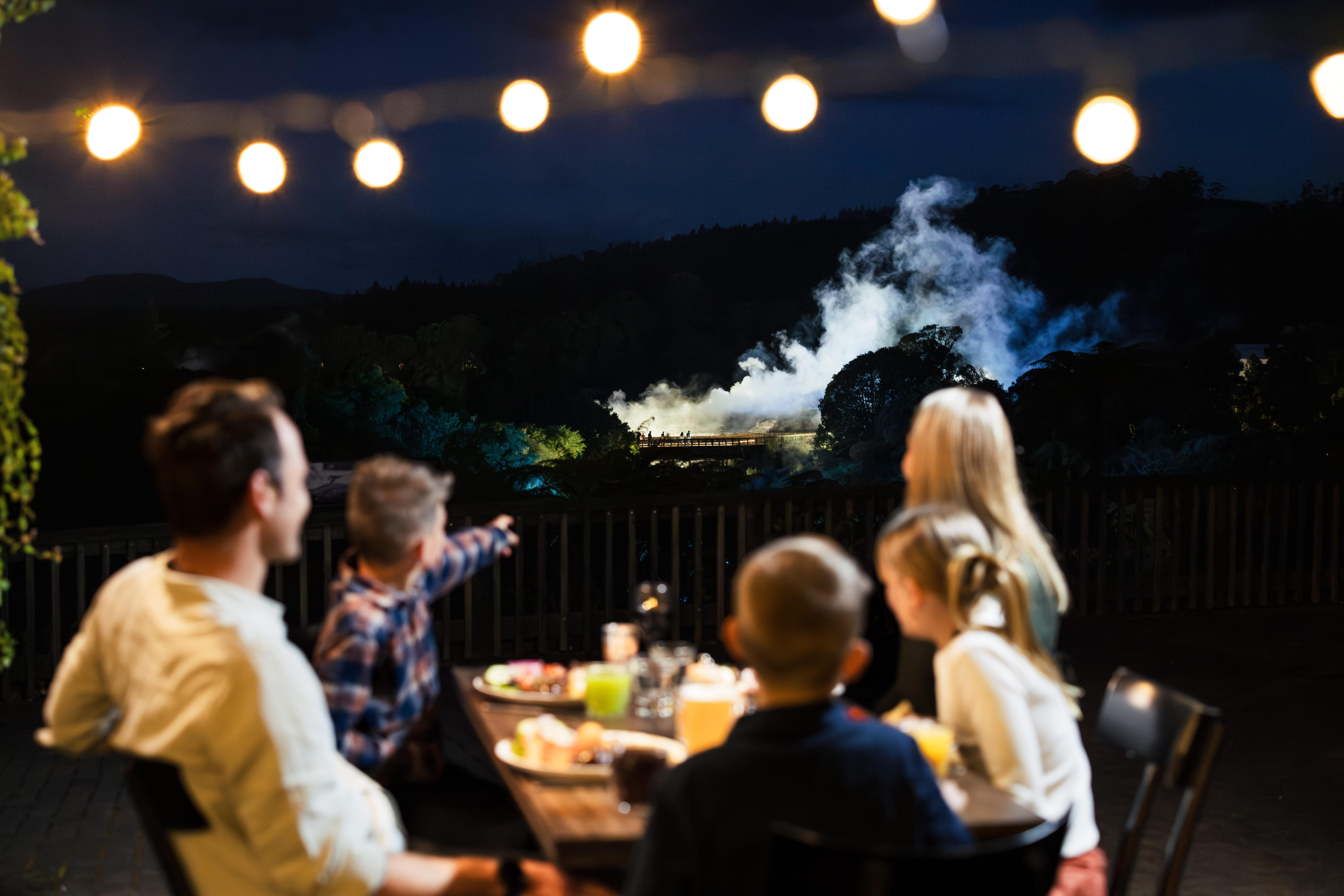
The on-site Pātaka Kai Restaurant offers buffet options overlooking the geothermal valley. Food and drink are not included in standard admission and are available for purchase on-site.

Around your visit

Everything else worth knowing

Best time to go, insider tips, nearby landmarks, and the cancellation fine print — flip through to skim what matters to you.

Cancellation policy

Flexible, no hidden fees.

Full refunds are available for cancellations made at least 24 hours prior to the scheduled start time. Cancellations made within this window may incur a penalty fee.

About

The place, in context

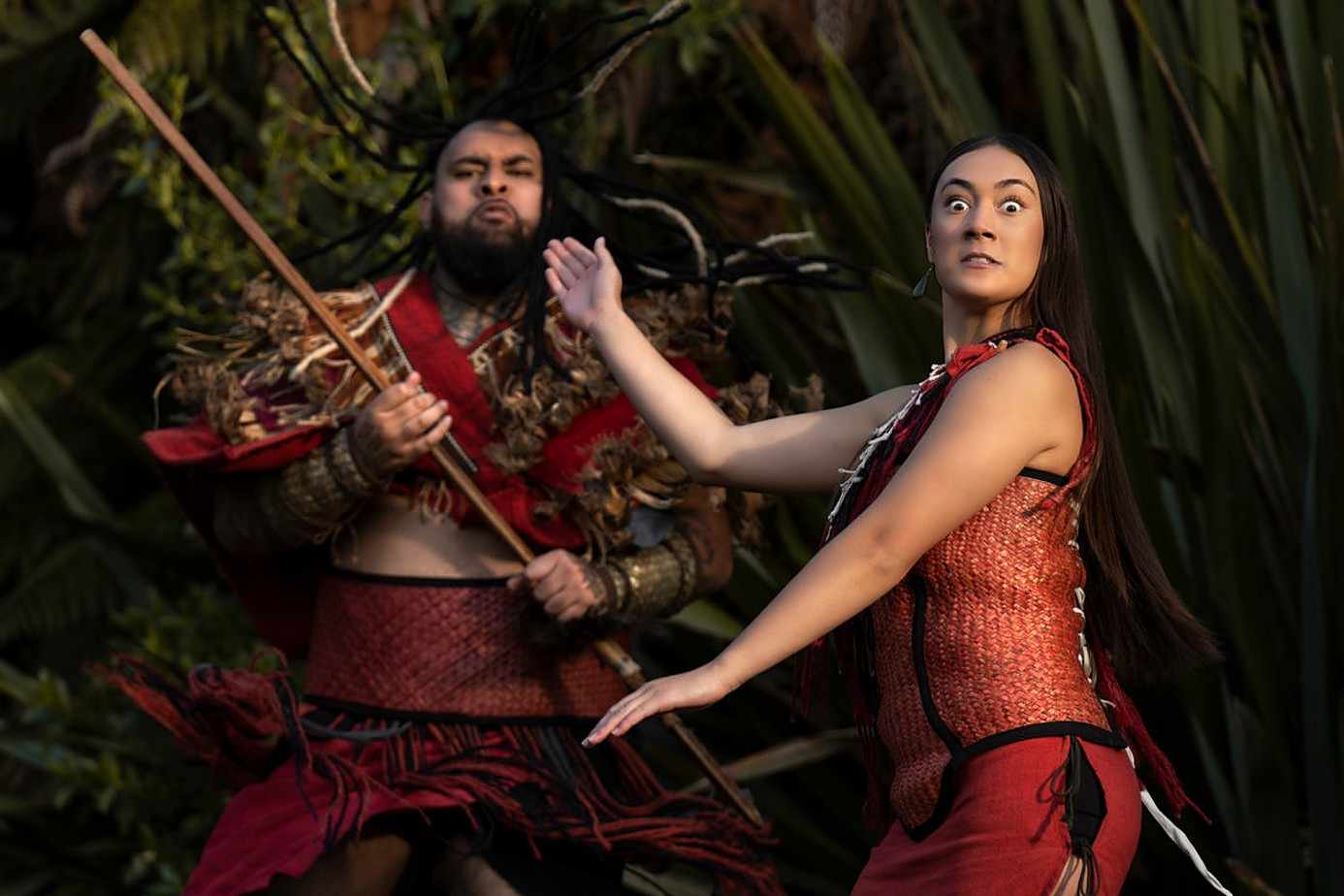
Pōhutu Geyser erupts up to twenty times a day, sending scalding water roughly thirty metres above the Whakarewarewa valley floor. Te Puia occupies that same thermal shelf on Hemo Road: sixty hectares of silica terraces, mud pools and ground too hot to stand on barefoot, held in trust by Te Arawa. The Maori Dance Show Rotorua travellers cross oceans for is staged here, inside a carved wharenui, with the geyser audible through the walls. Kapa haka is not folklore arranged for cameras. The form braids waiata, poi, wero and haka into one sequence, each element carrying whakapapa — genealogy — rather than plot. A wero opens proceedings: a warrior advances barefoot, tests the visiting party, and lays a carved token on the ground to be lifted. The pōwhiri that follows converts strangers into guests, and the exchange is formal rather than theatrical. Poi, spun on twisted flax cords, hold a rhythm no metronome improves; the sound is dry, percussive, exact. Voices carry in te reo Māori without translation, because translation is not the point. Performers are frequently drawn from local whānau, and a number of them work the carving and weaving benches by day. That overlap is deliberate. Te Puia houses the New Zealand Māori Arts and Crafts Institute, created by statute in 1963 to stop whakairo, raranga and pounamu work from thinning out to a handful of practitioners. Te Wānanga Whakairo, the national carving school, trains students on totara and stone in open-sided workshops where visitors may watch chisels at work. The weaving school prepares harakeke flax, scraped and dyed in paru mud drawn from the valley. Maori Dance Show Rotorua tours generally route past these benches before the performance, which reframes what audiences later watch: the cloaks, the taiaha, the carved posts of the meeting house are all made within a few hundred metres of the stage. A kiwi conservation centre stands nearby, its birds kept in a reversed nocturnal cycle. Rotorua's Māori cultural evening shows differ in emphasis rather than substance. Some pair the performance with a hāngī feast lifted steaming from an earth oven; at Te Puia the geothermal field does the cooking, steam boxes set directly over vents in the ground. Maori Dance Show Rotorua tickets for evening formats tend to clear before daytime entry through the December-to-February peak. What endures across all of them is unhurried and unchanged: a language spoken aloud, a challenge issued, a guest formally received.

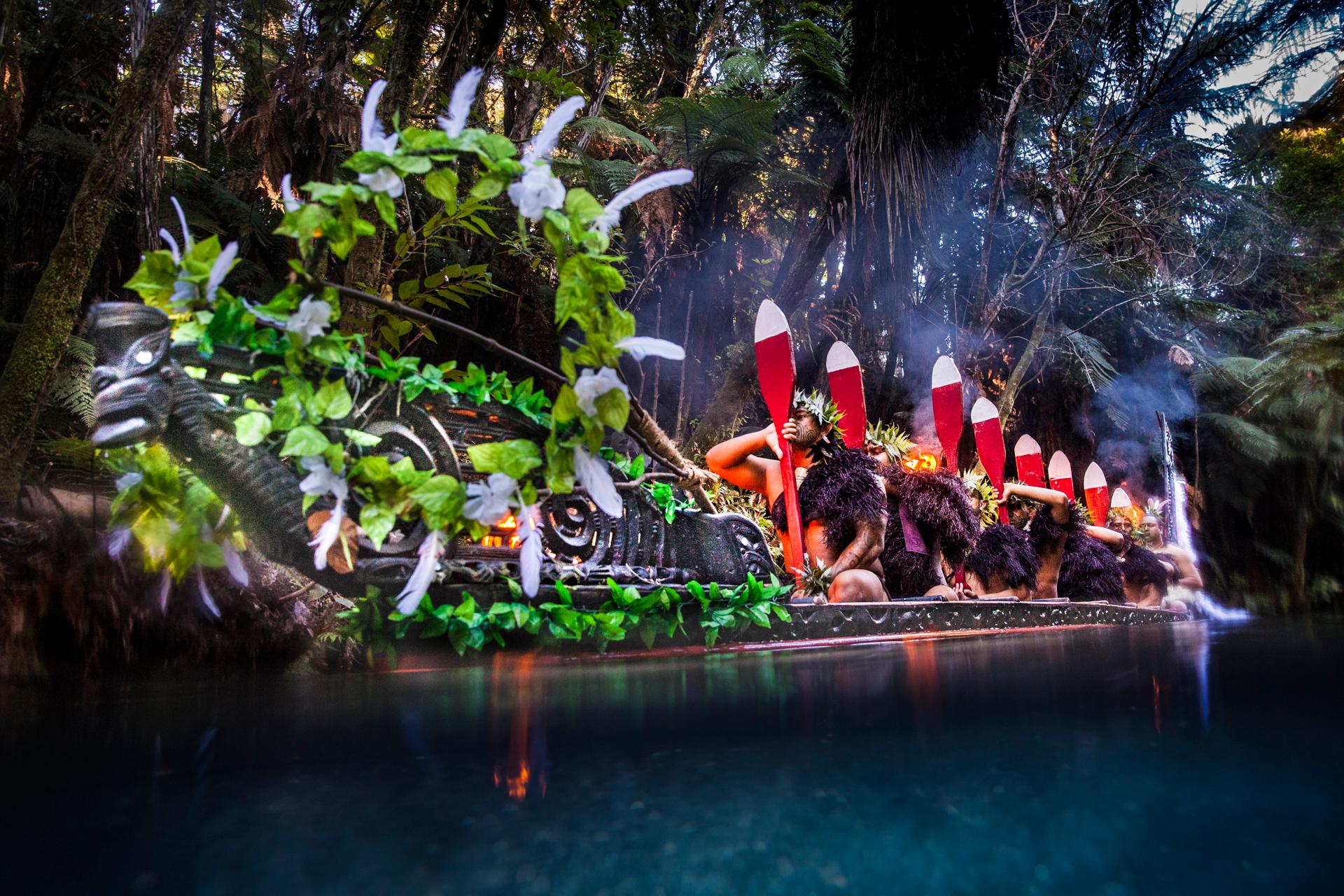
"Poi, spun on twisted flax cords, hold a rhythm no metronome improves."
Your experience

What a tour day looks like

A step-by-step walkthrough of the visit — what you'll see, how long each stage takes, and the details that matter.

You come in off Hemo Road inside the 09:00–16:00 window, and the smell reaches you first — sulphur, wet stone, cut timber. A guide meets your group at the gate. The 90-minute guided route takes you past the carving school before anything else: chisels tapping, a half-finished pou lying on trestles, wood shavings underfoot. You walk toward the noise of water. Pōhutu throws thirty metres of spray over the terrace and you feel the drift on your face, warm and faintly mineral. You stop at the mud pools, which sound like slow applause. Then the path bends back toward the wharenui. Here you slow down. A warrior comes at you across the marae ātea — eyes wide, taiaha low, a fern frond set on the ground. Someone from your group picks it up. Inside, you sit on a bench while the poi start, four beats, then eight, then a rhythm your chest tracks before your ear does. The haka arrives last and you feel it through the floorboards. A Maori Dance Show Rotorua tour ends without a curtain call; you shake hands, press noses if invited, and step back out into steam that has not stopped rising since you got here.

Frequently asked

Frequently asked questions about maori dance show rotorua tickets

What are the opening hours for a maori dance show rotorua tour?

Te Puia is open daily from 09:00–17:00. We recommend arriving between 09:00–16:00 to fully enjoy your experience.

Do I need to book my maori dance show rotorua tickets in advance?

Yes, booking your maori dance show rotorua tickets in advance is highly recommended to ensure availability for guided tours.

Is the maori dance show rotorua experience wheelchair accessible?

Yes, Te Puia is wheelchair accessible, and the facility offers complimentary wheelchairs for guest use.

What is included in the standard maori dance show rotorua admission?

Standard admission for the Te Rā guided experience at Te Puia includes a 90-minute tour of the geothermal valley, Kiwi Conservation Centre, and the New Zealand Māori Arts and Crafts Institute.

Can I bring bags into the maori dance show rotorua venue?

Te Puia is a cashless site. Please check with the admissions office regarding bag storage options if you are carrying large items.

Are there photography restrictions during the maori dance show rotorua?

Photography is allowed in most areas, but please refrain from using flash inside the Kiwi Conservation Centre or during specific cultural performances.

What is the best time to visit for a maori dance show rotorua?

The best arrival window is 09:00–16:00 to avoid peak crowds and ensure enough time for the 90-minute tour.

Is food available during my maori dance show rotorua visit?

Yes, Pātaka Kai Restaurant and Bar is located at Te Puia, offering dining options throughout the day.

How do I get to the maori dance show rotorua location?

Te Puia is located at Hemo Road, Tihiotonga, Rotorua 3040. It is easily accessible by car or local taxi services.

Are children allowed at the maori dance show rotorua?

Yes, families are welcome, and children aged 0-4 can enjoy Te Puia with free admission.