English| EUR
Suggested for you
More currencies
Choose a language
Visitors arrive in the central North Island having read the name a hundred times and said it aloud perhaps twice. The gap between the two is wider than most expect, because Te Reo Māori vowels do not behave like English ones. This how to pronounce Rotorua New Zealand guide sets out the sounds, the meaning behind them, and the reason the name is worth getting right at Te Puia.
Quick answer
Rotorua is spoken as four even syllables: Ro-to-ru-a, roughly "raw-taw-roo-ah". Every vowel is pure and unstressed — the "o" sits closer to the o in "or" than in "go", and the final "a" is a short "ah", never a schwa. The name means "second lake", from roto (lake) and rua (two). Guides at Hemo Road model it daily.
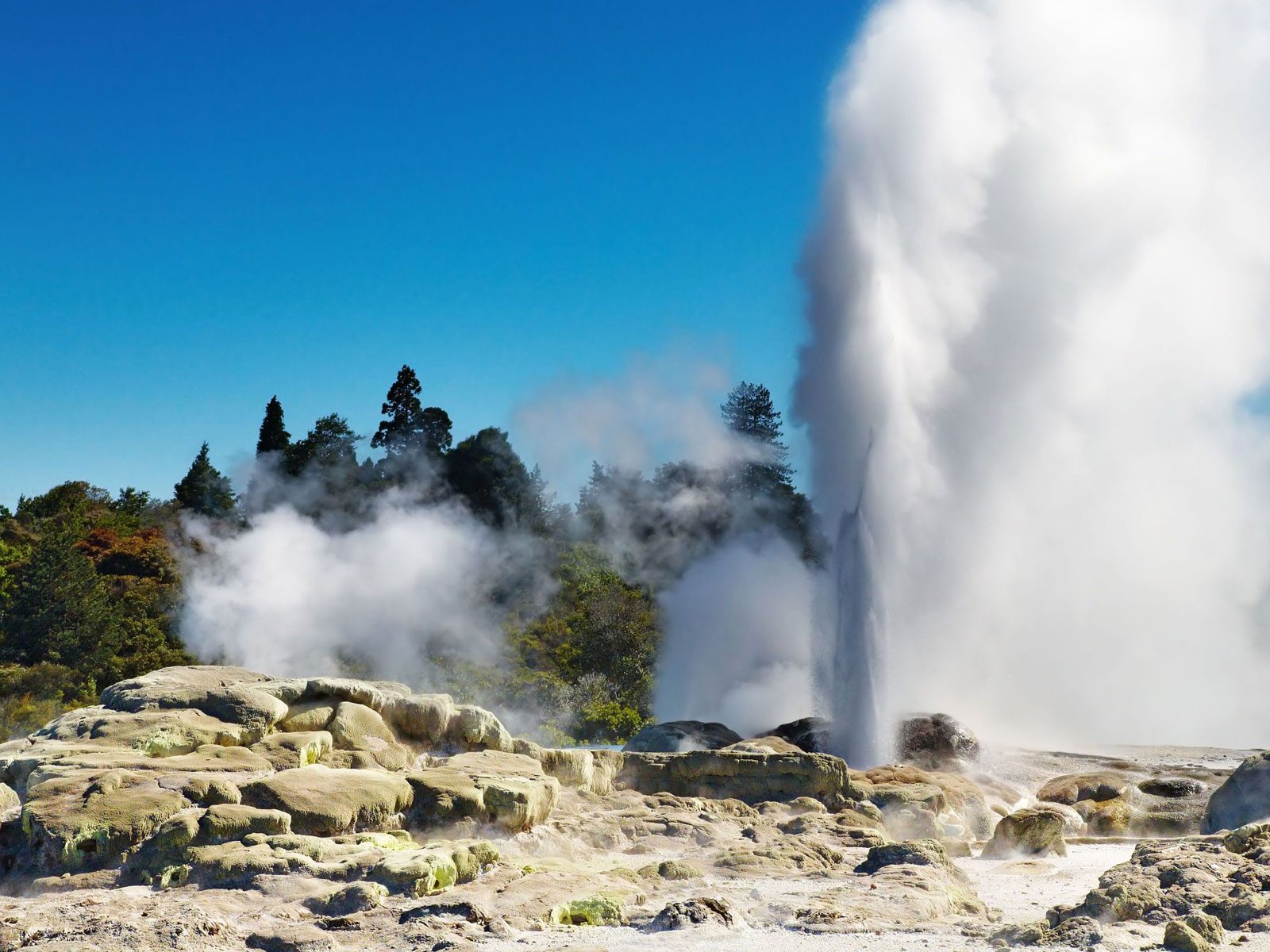
The name predates the town by roughly six centuries. Ihenga, the Te Arawa explorer, named the water Te Rotorua-nui-a-Kahumatamomoe — the second great lake of Kahumatamomoe — after reaching it inland from the coast. The modern shortened form kept both halves of that meaning intact, which is why anyone searching how to pronounce Rotorua New Zealand is really asking about two ordinary Te Reo Māori words joined together rather than one exotic one. The difficulty is structural, not phonetic. Te Reo Māori has five vowel sounds and each keeps a single value wherever it appears, while English shifts its vowels according to stress. English speakers therefore compress the middle of the word and land heavily on one syllable, producing "Ro-TOR-ua" or the three-beat "Roto-rua". Neither is how residents say it. Māori is a syllable-timed language: each of the four beats takes the same amount of time, and no syllable carries the emphatic punch English wants to give it. Ending consonants do not exist here either, so the word finishes open, on air. The same rules unlock most local place names — Whakarewarewa, Ngāti Whakaue, Tarawera, Ōhinemutu — which is the practical reward for learning one word carefully. Te Puia, on Hemo Road in Tihiotonga, is where the pronunciation stops being an academic exercise. The valley holds Pōhutu, the largest active geyser in the southern hemisphere, alongside the Ngārua mud pools and the two national schools of carving and weaving, Te Wānanga Whakairo Rākau and Te Rito. Guides on the Te Rā experience introduce themselves in Te Reo, name each site as they pass it, and repeat the words often enough that the vowel lengths embed by hearing rather than by reading. The kapa haka performance at the marae carries the same sounds in sung form, where the syllable timing becomes obvious. A visitor working through a Rotorua Māori cultural tour will hear the name spoken perhaps forty times before lunch. The advice, then, is to arrive with a rough version and let the place correct it. Say the four beats evenly, keep every vowel pure, resist the urge to stress. Asking a guide directly is welcomed rather than awkward — geothermal geography, whakapapa and language are treated as one subject at Te Puia, not three. Anyone still uncertain about how to pronounce Rotorua New Zealand after a morning in the valley has probably not been listening.
“Māori is a syllable-timed language: each of the four beats takes the same amount of time.”
The name Rotorua is rooted in Te Reo Māori, reflecting the region's deep connection to the land and geothermal history. Proper pronunciation honors the linguistic principles of the Māori language.
The name is correctly pronounced Ro-to-rua, with each vowel maintaining a consistent sound: o as in 'or', u as in 'put', and a as in 'father'. In Māori, vowels are never softened or elided, meaning every syllable receives equal clarity.
The name originates from Te Arawa, where the ancestor Ihenga named the lake Rotorua, meaning 'two' (rua) and 'crater lake' or 'second lake' (roto). This signifies the area as a place of discovery and settlement.
Te Reo Māori uses five distinct vowel sounds: a, e, i, o, u. Mastering these sounds is essential for pronouncing place names accurately and respecting the cultural heritage of the region.
As home to the New Zealand Māori Arts and Crafts Institute, Te Puia is a location where the Māori language is integral to daily operations. Using correct pronunciation is a gesture of respect for the iwi, or tribe, that preserves these traditions.
Naming in Māori culture often links to historical events, natural features, or ancestral journeys. Understanding the breakdown of Rotorua provides insight into how the land was interpreted by early inhabitants.
Rotorua is located within the Taupō Volcanic Zone, a region defined by intense geothermal activity. The linguistic history of the area often mirrors its geological significance, grounding the name in the environment.
Te Puia operates on a consistent schedule throughout the week to accommodate visitors interested in local culture and geothermal features.
Te Puia is located at Hemo Road, Tihiotonga, Rotorua 3040, New Zealand. The site is easily accessible by road via the main southern entrance to the city.
State Highway 5 (Hemo Road)
CityRide Rotorua Route 10 to Hemo Road
Direct service to Hemo Road
Ample parking is available on-site for visitors arriving by private vehicle. Arriving between 09:00–16:00 ensures you have sufficient time to navigate the grounds before closing.
To maximize your guided experience at Te Puia, the best arrival window is between 09:00 and 16:00. This timeframe ensures you have sufficient duration to explore the grounds before the site closes.
Warm, 15°C to 24°C; high UV. High season brings more visitors to the geothermal valley.
Mild, 10°C to 19°C. Cooler temperatures provide pleasant conditions for outdoor walking tours.
Cool, 4°C to 14°C. Crisp mornings often offer clearer views of geothermal activity.
Variable, 7°C to 17°C. Stable weather makes this a consistent period for site exploration.
Verdict: Plan your visit between 09:00 and 16:00 during the shoulder months of April or October for a balance of comfortable weather and manageable crowd levels.
Everything you need to know about how to pronounce rotorua new zealand
The name is pronounced roh-toh-roo-uh, with the emphasis on the second syllable and a rolled r sound. Many visitors practice this to respect local Māori culture when visiting landmarks.
Learning how to pronounce rotorua new zealand is quite manageable with a bit of practice on the vowel sounds. Māori is a phonetic language, so each letter typically corresponds to a single consistent sound.
Te Puia is a geothermal valley featuring the Pōhutu Geyser and traditional arts. It is located at Hemo Road, Tihiotonga, Rotorua 3040, New Zealand.
Yes, the standard adult general admission covers the Te Rā guided experience. This tour provides insight into the geothermal features and cultural significance of the site.
We recommend checking the official site at https://tepuia.com to coordinate your visit. Ensure you arrive during the daily opening hours of 09:00–17:00.
When asking locals about the city, knowing how to pronounce rotorua new zealand helps clarify your destination clearly. It is situated in the central North Island and is a hub for Māori culture.
It is helpful to arrange your visit ahead of time to ensure entry for the guided experience. The entrance fee is 105 NZD for a standard adult ticket.
Familiarizing yourself with how to pronounce rotorua new zealand is a great way to prepare for your cultural journey. For the best experience, plan your arrival between 09:00 and 16:00 to allow sufficient time for your tour.
Rotorua Maori Cultural Show
Read more Tickets & toursRotorua Maori Concert
Read more Tickets & toursMaori Dance Show Rotorua
Read more Tickets & toursMaori Hangi and Show Rotorua
Read more Tickets & toursMaori Village Show Rotorua
Read more Tickets & toursRotorua Maori Dinner Show
Read more Tickets & toursRotorua Haka Show
Read more GuideBest Maori Show in Rotorua
Read more